A few years into my career, a patient in his early fifties came in with severely inflamed gums. He had been putting off dental care for years, and the infection was advanced. During our conversation, he mentioned that his cardiologist had actually been the one to urge him to see a dentist. His doctor had told him that the chronic infection in his mouth could be contributing to his cardiovascular problems. That conversation stuck with me because it highlighted something that the medical and dental communities have been studying with increasing urgency: the relationship between what happens in your mouth and what happens in your heart.
How Oral Health and Heart Disease Are Connected
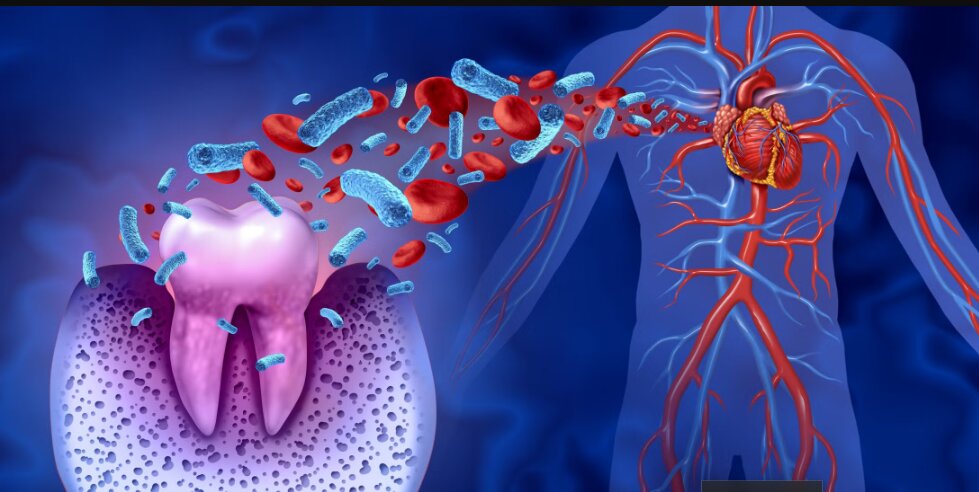
The connection between oral health and heart disease centers largely on inflammation and bacteria. When you have periodontal disease, which is a chronic infection of the gum tissue and the bone supporting your teeth, your mouth becomes a reservoir of harmful bacteria. These bacteria do not always stay put. They can enter the bloodstream through inflamed, bleeding gum tissue, a process that can happen during something as routine as chewing or brushing when your gums are compromised.
Once in the bloodstream, these oral bacteria have been found in atherosclerotic plaques, the fatty deposits that build up inside artery walls. Researchers have identified specific periodontal pathogens, such as Porphyromonas gingivalis, within these arterial plaques. The theory is that these bacteria may contribute to the inflammatory process that causes plaques to form, grow, and potentially rupture, leading to heart attacks and strokes.
Can Gum Disease Cause Heart Problems
This is the question at the center of the research, and the honest answer is that we are still working out the details. What we can say is that gum disease and heart disease share a strong statistical association. Multiple large-scale studies have shown that people with periodontal disease have a higher risk of developing cardiovascular disease, even after accounting for shared risk factors like smoking, diabetes, and age.
Whether gum disease directly causes heart problems or whether both conditions are driven by common underlying factors, such as a heightened inflammatory response, remains an active area of investigation. In my experience, the practical takeaway for patients is the same either way. Treating gum disease reduces systemic inflammation, and reducing systemic inflammation is beneficial for cardiovascular health. The American Heart Association reviewed the available evidence in a scientific statement and concluded that while a causal relationship has not been definitively proven, the association is significant enough to warrant attention.
The Role of Chronic Inflammation
To understand this connection more deeply, it helps to think about inflammation as a whole-body phenomenon. Your immune system does not draw neat boundaries between your mouth and the rest of your body. When your gums are chronically inflamed, your body is in a constant state of low-grade immune activation. This shows up in blood tests as elevated levels of C-reactive protein and other inflammatory markers, the same markers that cardiologists use to assess cardiovascular risk.
Chronic inflammation damages the inner lining of blood vessels, making them more susceptible to plaque build-up. It also makes existing plaques less stable and more likely to break loose, which is what triggers most heart attacks. So even if oral bacteria themselves are not directly damaging your arteries, the inflammatory cascade that periodontal disease triggers throughout your body may be contributing to cardiovascular damage through indirect pathways.
What the Research Shows
Several landmark studies have helped shape our understanding. A 2012 review published in the Journal of Dental Research analysed data from multiple studies involving over 200,000 participants and found that periodontal disease was associated with a 24 to 35 percent increase in the risk of coronary heart disease. More recent research has continued to support this finding. A 2020 study published in Hypertension found that people with gum disease had significantly higher blood pressure and responded less well to blood pressure medications.
Intervention studies have also been informative. Research has shown that professional treatment of periodontal disease, including scaling and root planning, leads to measurable improvements in endothelial function, which is the ability of blood vessels to dilate properly. Treated patients also show reductions in systemic inflammatory markers. These findings suggest that managing gum disease has real, measurable effects on cardiovascular health indicators.
Shared Risk Factors
It is worth noting that gum disease and heart disease share many of the same risk factors. Smoking is a major contributor to both conditions. Diabetes increases the risk and severity of periodontal disease while also being a well-established cardiovascular risk factor. Poor diet, obesity, and stress play roles in both. Age is another common factor, as the prevalence of both conditions increases as we get older.
This overlap is one reason the relationship is so difficult to untangle from a research perspective. However, in clinical practice, it reinforces the importance of taking a whole-health approach to patient care. When I see a patient with advanced gum disease, I ask about their cardiovascular health, their blood sugar levels, and their smoking status. These conversations matter because the mouth is not separate from the body.
What This Means for You
If you have been told you have gum disease, take it seriously. Not just for the sake of your teeth, but for your overall health. Follow through with the treatment your dentist recommends, whether that involves deep cleanings, improved home care, or more frequent maintenance visits. If you have a history of heart disease or known cardiovascular risk factors, make sure both your dentist and your physician are aware of your complete medical picture.
Taking care of your gums is one of the most accessible things you can do to reduce chronic inflammation in your body. Brush thoroughly twice a day, clean between your teeth daily with floss or interdental brushes, and keep up with your regular dental visits. These are simple habits, but the research increasingly suggests that their benefits extend well beyond your smile. Your heart may be quietly thanking you for every minute you spend taking care of your gums.