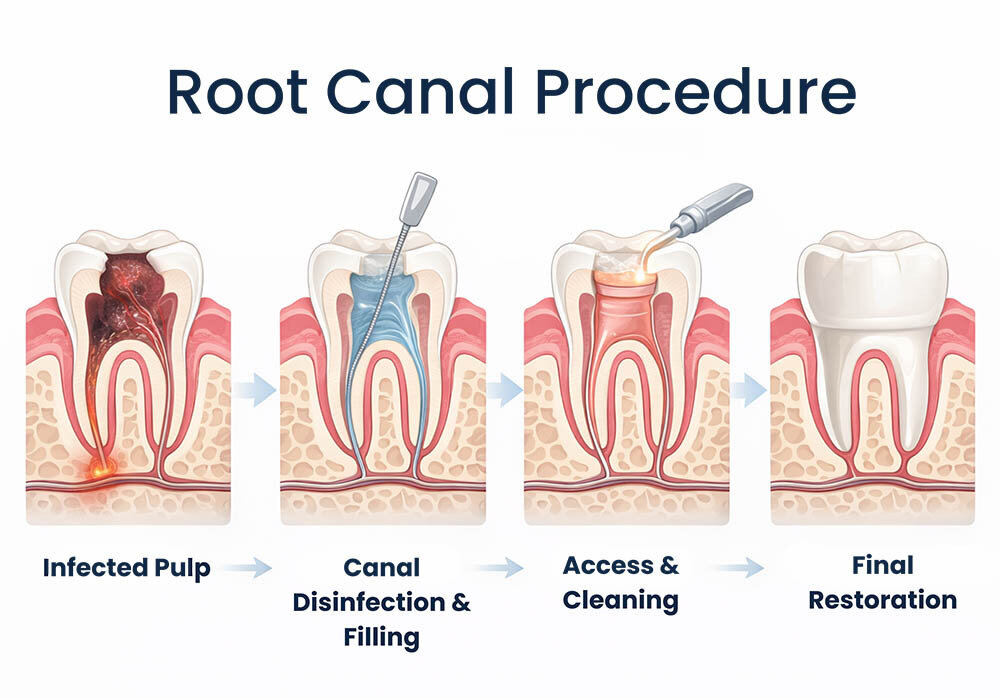
If there is one dental procedure that makes people visibly tense just hearing its name, it is the root canal. I have watched the color drain from a patient's face when I suggested they needed one. The reputation this procedure has earned is dramatic, but in my experience, the reality is far less scary than the myth. Most patients tell me afterward that it was nothing like what they expected, and many compare it to getting a routine filling. So let me take you through what actually happens, step by step, and hopefully replace some of that fear with facts.
Why Root Canals Are Necessary
To understand the procedure, it helps to understand what is happening inside the tooth. Every tooth has a hollow interior that contains the dental pulp, a soft tissue made up of nerves, blood vessels, and connective tissue. The pulp is vital during tooth development, but once a tooth is fully mature, it can survive without the pulp because it continues to receive nourishment from surrounding tissues.
When the pulp becomes infected or irreversibly inflamed, typically from deep decay, a crack in the tooth, repeated dental procedures on the same tooth, or trauma, it needs to be removed. If left untreated, the infection can spread to the surrounding bone, forming an abscess that can cause severe pain, swelling, and even systemic health problems. A root canal removes the infected tissue, eliminates the bacteria, and saves the natural tooth. The alternative is extraction, which creates its own set of challenges.
Does a Root Canal Hurt
This is the question I answer most often, and I understand why. The fear of pain is what drives most of the anxiety around this procedure. Here is the truth: a root canal should not hurt. Modern anesthesia is highly effective, and the vast majority of patients are completely numb throughout the procedure. In fact, most people who need a root canal are already in significant pain from the infected tooth, and the procedure actually provides relief.
I tell my patients that if they have ever had a filling placed, the experience is similar. You will feel pressure and vibration at times, but you should not feel sharp pain. If at any point during the procedure you begin to feel discomfort, you should tell your dentist immediately. Additional anesthesia can be administered to keep you comfortable. The old horror stories about root canals largely date back to an era before modern anesthetic techniques and instruments. Dentistry has come a very long way.
What Happens During a Root Canal Step by Step
The first step is thorough numbing. Your dentist or endodontist, which is a specialist in root canal treatment, will administer local anesthesia to ensure you are completely comfortable. Once the tooth is fully numb, a small rubber dam is placed around the tooth. This thin sheet of rubber isolates the tooth from the rest of the mouth, keeping it dry and preventing bacteria from saliva from entering the treatment area.
Next, your dentist creates a small opening in the top of the tooth to access the pulp chamber. Using very small, flexible instruments called files, the infected pulp tissue is carefully removed from the chamber and the root canals. These canals are tiny passages that run from the pulp chamber down through the roots of the tooth. The canals are cleaned, shaped, and disinfected using a combination of mechanical instrumentation and antimicrobial irrigation solutions.
Once the canals are thoroughly cleaned and shaped, they are filled with a biocompatible rubber-like material called gutta-percha. This material is placed along with a sealer cement to completely seal the canals and prevent bacteria from re-entering. A temporary or permanent filling is then placed in the opening to close the tooth. In most cases, a crown will be recommended to protect the tooth, since teeth that have had root canals can become more brittle over time without the reinforcement of a crown.
How Long Does It Take
A straightforward root canal on a front tooth with a single canal might take 45 minutes to an hour. A molar, which can have three or four canals, may take an hour to an hour and a half. Some cases require two appointments, particularly if the infection is severe and your dentist wants to place medication inside the tooth between visits to ensure the bacteria are fully eliminated.
Endodontists, who perform root canals routinely and have advanced training and specialized equipment, often complete the treatment more efficiently. They use surgical microscopes that provide magnified views of the canal anatomy and rotary instruments that shape canals more predictably. If your general dentist refers you to an endodontist, it is a good sign that they want to ensure you get the best possible outcome.
After the Procedure
Most patients experience some tenderness around the treated tooth for a few days following the procedure. This is normal and usually manageable with over-the-counter pain medication like ibuprofen. The tenderness comes from inflammation in the tissues surrounding the root tips, not from the tooth itself, since the nerve has been removed. Most people return to normal activities the same day or the day after.
It is important to follow through with getting a crown placed on the tooth if your dentist recommends one. A root canal treated tooth without a crown is at higher risk of fracturing, especially if it is a back tooth that bears significant chewing forces. Placing a crown protects the investment you have made in saving the tooth.
Success Rates and Long-Term Outlook
Root canal treatment has a high success rate. Studies consistently show success rates between 85 and 97 percent, depending on the tooth and the clinical situation. A properly treated and restored tooth can last a lifetime with good oral hygiene and regular dental care. I have patients who received root canals decades ago and their teeth are still functioning perfectly.
The next time someone tells you they would rather do anything than have a root canal, you can let them know that modern root canal treatment is a routine, comfortable procedure that saves teeth and relieves pain. The real discomfort comes from leaving an infected tooth untreated. A root canal is the solution, not the problem.